After the 2003 San Simeon earthquake, crews drilled 248 micropile anchors as deep as 60 feet into bedrock to save Atascadero's City Hall. It reopened in 2013.
E.G. Lewis and the colony
Before Atascadero, Edward Gardner Lewis had built University City, Missouri, around his publishing business (Woman's Magazine and Woman's Farm Journal), near the grounds of the 1904 St. Louis World's Fair. In 1913 he came west, bought the Atascadero Rancho for $37.50 an acre and used his Missouri presses to advertise a new model community.
He hired experts in agriculture, engineering and planning. Settlers lived in a Tent City with a general store, laundry and even a movie theater while the first permanent buildings went up. Those were not homes but anchors: the Printery, a hospital and the Administration Building.
The Administration Building
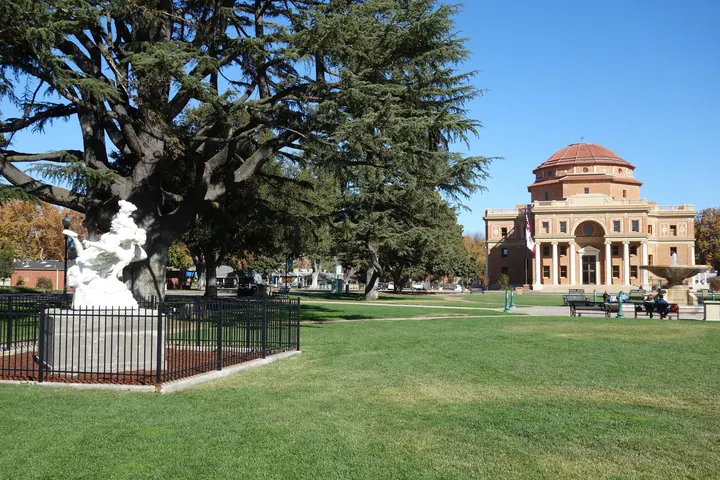
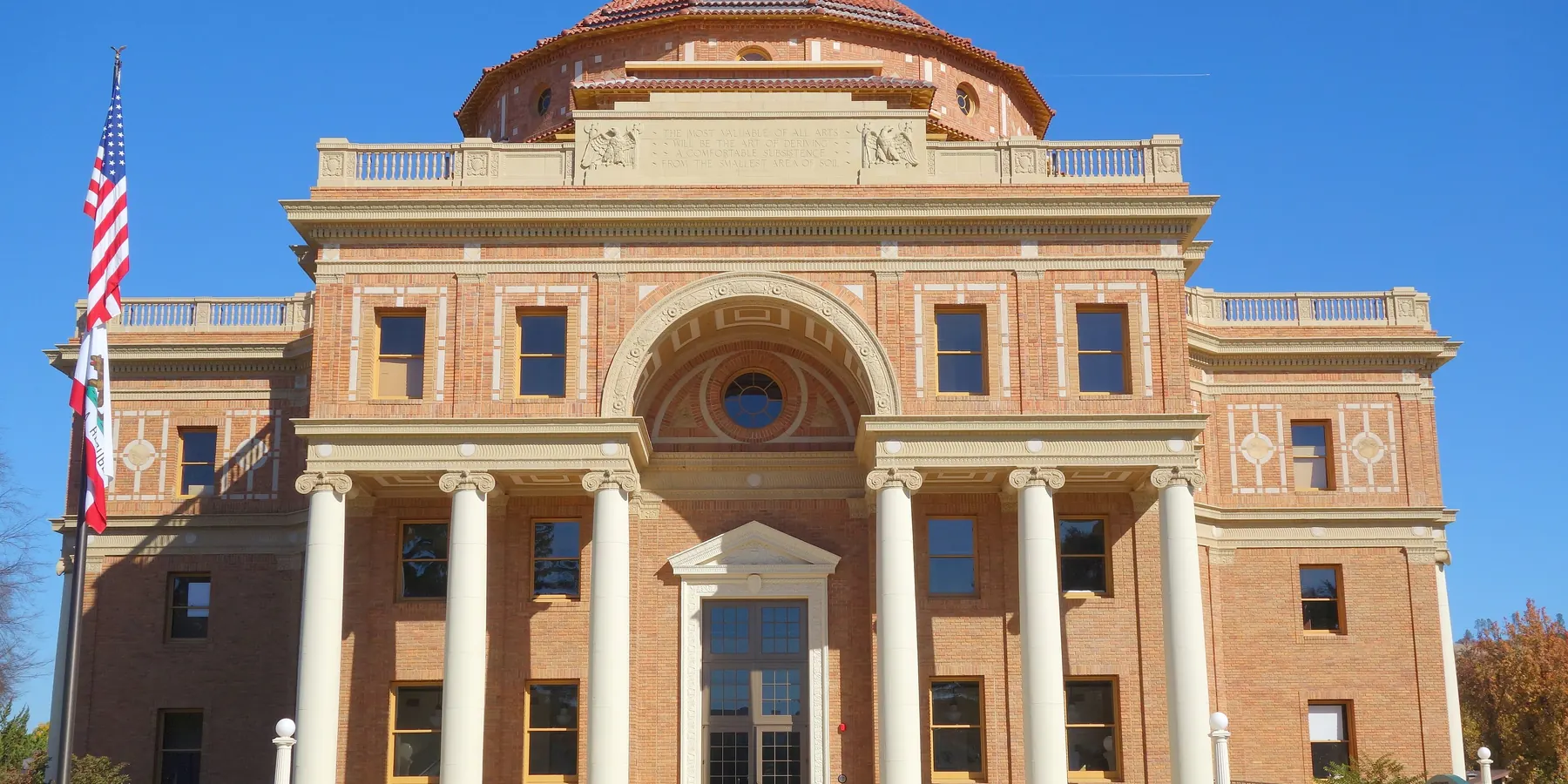
Bliss designed a four-story, double-domed Italian Renaissance building inspired by the architecture of the St. Louis fair, fronted by a formal Sunken Garden. The cornerstone was laid on July 12, 1914, and the building was finished in 1918. It served as the center of Lewis's colony for only about nine years before he was forced into bankruptcy.
Frank Moran of Seattle bought it in 1927 for a prep school. Other schools and a bank followed until San Luis Obispo County bought it in 1954 and renamed it the Atascadero Veterans Memorial Building. Over the years it housed dances, Boy Scout meetings, a museum and the community library.
When Atascadero incorporated in 1979, the new City Council met in the upper Rotunda. The building joined the National Register of Historic Places in 1977 and became California Historical Landmark No. 958 on March 4, 1984.
The 2003 earthquake and the comeback
At 11:15 a.m. on December 22, 2003, the magnitude 6.5 San Simeon earthquake struck. Bricks flew from the walls and interior columns twisted, but steel added in a 1984 seismic upgrade kept the Rotunda from collapsing. No city employees were hurt.
Damage assessment, FEMA negotiations and design took six years. The repair, estimated at $43 million, included 248 micropile anchors drilled as much as 60 feet into bedrock. The restored City Hall reopened in 2013, and today it again houses city offices, with rooms available to rent for events.
Seeing it today
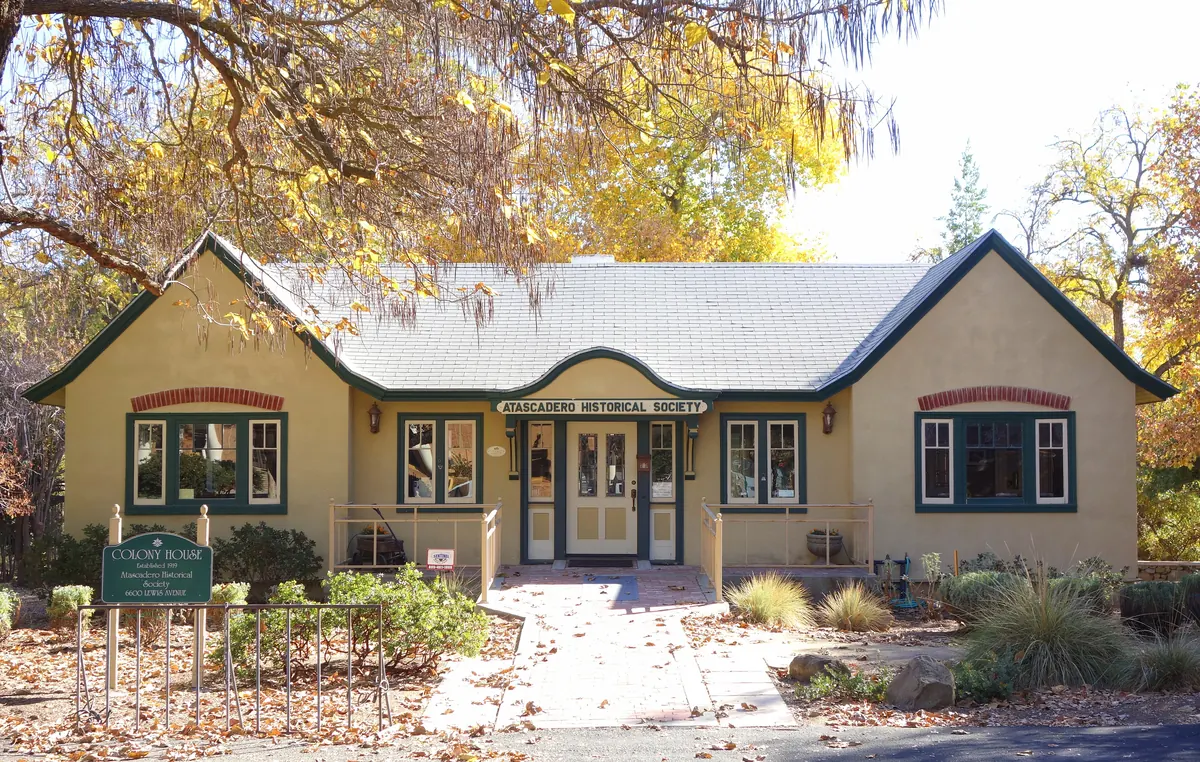
City Hall faces the Sunken Gardens at 6500 Palma Avenue, across El Camino Real from downtown. The Atascadero Historical Society offers tours and owns an original 1919 Colony House. See Downtown Atascadero & the Sunken Gardens.
Please verify. Historical details are from the sources listed. Tour schedules and building hours change, so check before you visit.
Get Atascadero listing alertsWhat's my Atascadero home worth?